The Arnebergbua tun by Lake Fullsenn in Valdres: Arneberg’s fishing cabin in the foreground, the main cabin behind.

HERITAGE · VALDRES

HERITAGE · VALDRES

Arnstein Arneberg’s fishing cabin at Fullsenn

Arnstein Arneberg’s fishing cabin at Fullsenn

One of Norway’s most significant architects left more than grand buildings behind. By a still mountain lake in Valdres stands the small fishing cabin he used for decades – kept, restored, and still marked by his own hand.

Today the cabin is part of Arnebergbua Retreat – a private hyttetun by the lake, rented as one: the main log cabin with kitchen and two bedrooms, and Arneberg’s fishing cabin as the third sleeping space. You stay in the whole tun, sleeping up to six.

Book now

Book now

Seasonal stays · 2–6 (8) guests

Seasonal stays · 2–6 (8) guests

01 · The architect

01 · The architect

The architect

The architect

Arnstein Arneberg (1882–1961) was among the foremost Norwegian architects of his generation. He designed Oslo City Hall and shaped some of the country’s most important interiors – including the chamber of the UN Security Council in New York. Away from the drawing board, he returned to something far simpler: a modest fishing cabin high in the mountains of Valdres, by the shore of Lake Fullsenn.

Arnstein Arneberg (1882–1961) was among the foremost Norwegian architects of his generation. He designed Oslo City Hall and shaped some of the country’s most important interiors – including the chamber of the UN Security Council in New York. Away from the drawing board, he returned to something far simpler: a modest fishing cabin high in the mountains of Valdres, by the shore of Lake Fullsenn.

02 · The fishing cabin

Arnstein Arneberg’s fishing cabin

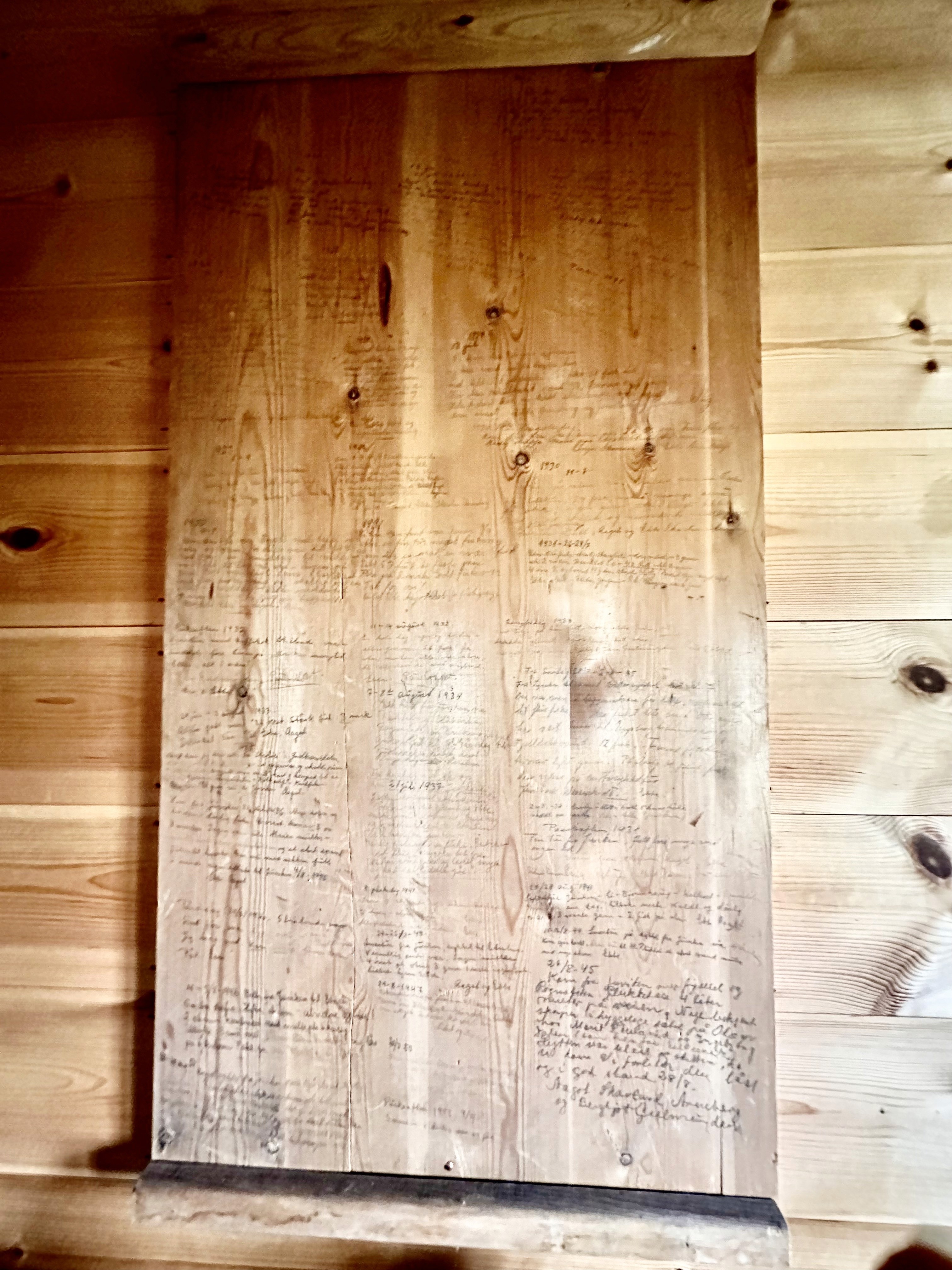
From 1919, Arneberg used the little cabin – now known as Arnebergbua – to fish, rest and withdraw. On one wall hangs the original panel where he noted the family’s fishing trips, with dated entries that begin in July 1919 and continue into the years after the war, the last in the early 1950s. On the inner door he left a message, in his own hand: «Benyt stūen i nödsfald men vær venlig ikke at ödelægge noget.»

Interior of the fishing cabin Arnebergbua with dark sideboard, washstand and turquoise curtains
Arnstein Arneberg's handwriting on the wall panel inside the fishing cabin, entries from 1919 and the years after the war, the last in the early 1950s

03 · Kept for the future

Kept for the future

That wish has been honoured. In recent years the historic fishing cabin has been carefully restored with deep respect for its original character – jacked up and stabilised, given new roofing felt, and painted afresh outside – without changing what it is. It remains a living piece of heritage, off-grid and unhurried, with the character Arneberg knew carefully preserved.

The restored exterior of the Arnebergbua fishing cabin by Lake Fullsenn

04 · The cabin today

The cabin today

Arneberg’s fishing cabin stands today within the fenced tun, alongside the main cabin. Everything is rented as one: the main cabin with living room, kitchen and two bedrooms, the bua as a third, separate bedroom. One stay, one tun – entirely private.

Arneberg's fishing cabin in the foreground and the main cabin behind, together inside the fence on the Arnebergbua tun.

05 · Book

Reserve a few quiet days at Arnebergbua.

Reserve a few quiet days at Arnebergbua.

Book now

Book now

Ask us directly